Mehmet Hakkı Suçin
Introduction
By virtue of its location and of the civilisations with which it has traded, commercially and literarily, the Mediterranean is the bright, luminous, warm memory of the ancient, medieval and modern worlds. It is the mouth that carries the words of the world, reinforcing and multiplying the meaning of human existence. Heroes, sages and peoples began the history of humankind here; languages were carved here with chisels on hard stones, and the first fires were lit here on shards of clay. The first words were born here, and here humanity kindled its intellectual adventures. The most beautiful stories, the longest epics and the greatest poems were written on the blue, foaming pages of the Mediterranean. If this great, blue, salty, luminous, fertile sea is not the bright, fecund memory of the world, then what is it?
All seven of the Seven Wonders of the World lie in the Mediterranean. But are the wonders of the world limited to seven? Surely they are far more than numbers. Are Homer’s Iliad and Odyssey, in which a blind poet told of mortals and immortals with great mythological energy, not the wonder of wonders? The Epic of Gilgamesh, the Sumerian, Babylonian, Akkadian and Ebla tablets and the Ugaritic alphabet are also among the wonders of the world.
Does the name of the European continent not also come from the Mediterranean? Did the Phoenician princess Europa, whose story blends history and legend, reality and imagination, to tell how the East was born in the West, not give her name to a whole continent? Are al-Andalus, the rising civilisation of its age, al-Mutanabbi, who wove the songs of humanity between Iraq and Egypt, and Yunus Emre, who journeyed from Anatolia to the human heart, not Mediterranean? Because of all this fertility, the Mediterranean is the warm womb of the world and its bright memory.
Wherever you go in the world, however far you travel, you will find the Mediterranean in food, in clothing, in architecture and in language. You will find it in songs, in dances and in temple music; in maps, in colours and in many other details.
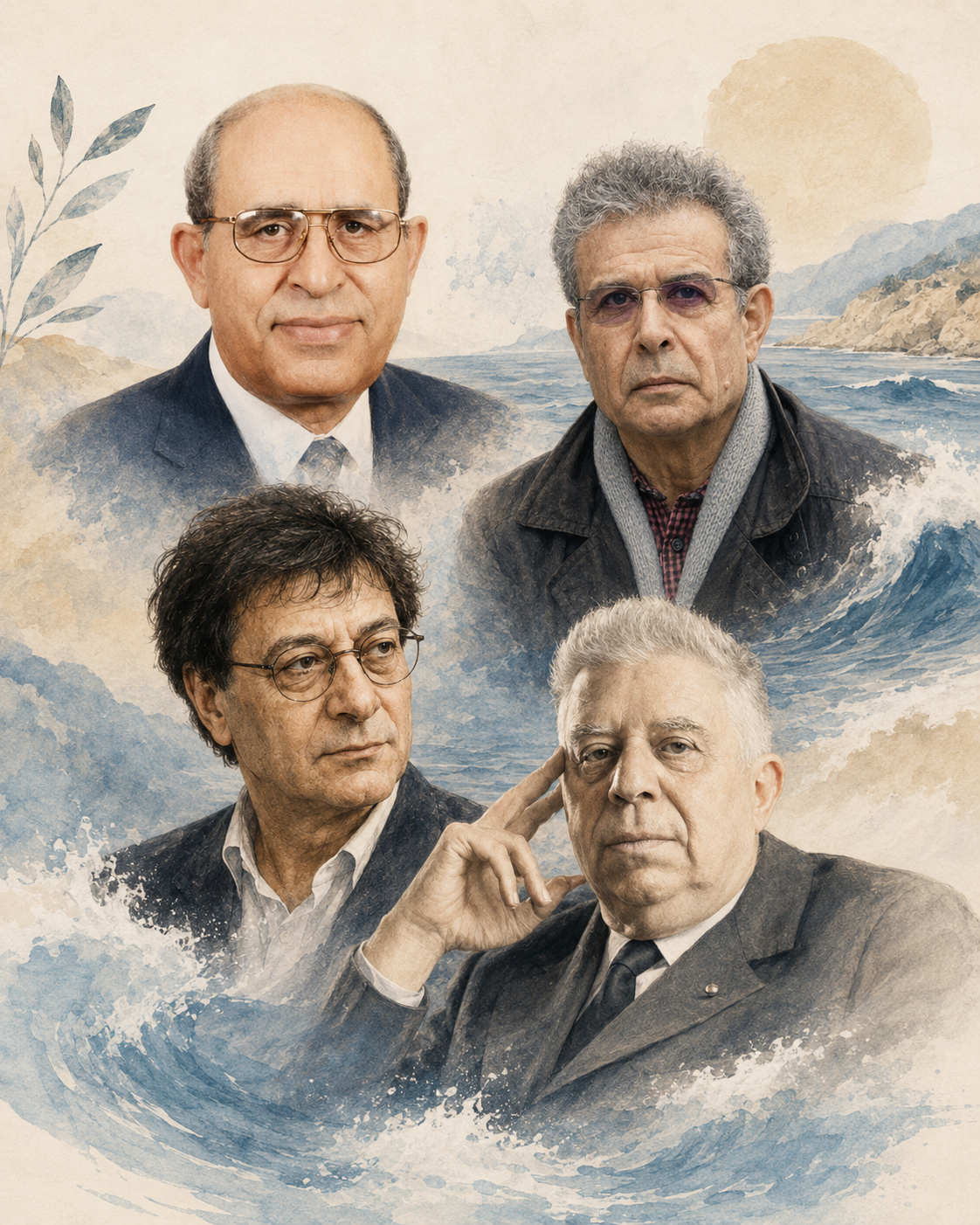
The intersecting and diverging Mediterraneans of four Mediterranean poets
Today the Mediterranean and Mediterraneanness occupy a central place in the texts of many poets and writers. Given the ancient dimension of the subject as well as its multilingual and multi-ethnic character, it is clear that an in-depth and comprehensive study would require collective work.
As a modest beginning for such studies, I shall attempt to compare how representations of the Mediterranean manifest themselves in the texts of three poets – two Arabs (the Palestinian Mahmoud Darwish and the Syrian Nouri al-Jarrah) and one Italian (Eugenio Montale) – the interactions between historical background and the vastness of poetic language, and the existential, metaphysical, cultural or symbolic dimensions of the Mediterranean.
Before turning to how the Mediterranean appears in the texts of these poets, I would like to begin with short excerpts from the “autobiographical” essay “The Poetics of the Mediterranean: Amurru, the Great Canaanite Sea”, in which the Palestinian Ezzedine al-Manasra wrote about his own experience of the Mediterranean in 2021, two years before his death. Ezzedine al-Manasra (2019) writes:
“I was born between two seas: the Dead Sea and the Mediterranean. I used to look at the Mediterranean from a mountain in the town of Halhul, at the entrance to Hebron. But I could not touch the waters of either sea, because the ‘state that has driven its stake into our land’ forbade us to do so, and the ban still continues. We have only the right to look at the sea from afar. My relationship with the Mediterranean began after I left Palestine for forced exile in 1964. After the 1967 catastrophe I was forbidden to enter Palestine. After a million Palestinians had been displaced from their homes in the 1948 areas, this time the West Bank under Jordanian rule and the Gaza Strip under Egyptian rule were occupied. I thus became a refugee in fact, but no one acknowledged my being a refugee. To tell the truth, I myself never came to terms with being a refugee, for I had no doubt that everything was temporary.
I swam in the Mediterranean for the first time in Alexandria in 1966. Coming from the Hebron mountains, I fell in love with the sea. But my strongest relationship with the Mediterranean was in Beirut; from the beaches of Beirut to the shore of Sarafand and the history-scented shore of Tyre, the sea became my constant companion.
My relationship with the beaches of Damour and Saadiyat, between Beirut and Sidon, was also strong during the time I was headmaster of the school opened in Damour for the children of the Tell al-Zaatar camp, who had been displaced in the summer of 1976. In Sidon I swam near the Black Island.
Then I had to leave Beirut as well. At the end of the siege of Beirut, which I lived through entirely within the framework of the PLO, my friends were leaving for Algeria and Yemen. I did not know where to go. A friend suggested Tartus, and the idea appealed to me. On 1 September 1982 I was put aboard a Greek ship called Shams al-Mutawassit [Sun of the Mediterranean], sailing from the port of Beirut to the Syrian port of Tartus. The ship carried 682 fighters, among them children and women, myself included. French planes flew over us, watching the ship from the port of Beirut to the port of Tartus. At last we reached Tartus, but the guards at the port prevented us from entering the city. They had prepared seven large buses to take us to a Syrian army camp thirty kilometres from Damascus. On the bus with me were the Iraqi poet Saadi Youssef, the Egyptian artist Nadia Lutfi and some political leaders.
Then the Mediterranean met the Atlantic. Between 1982 and 1991 I lived in Tunisia and Algeria. The Salwa Hotel in Tunis was the headquarters of the Palestinian leadership under Yasser Arafat. With my wife and child I stayed in the room next to Arafat’s office in that hotel. We were not allowed to go to the suburbs of Tunis except at certain hours, but two months later we were allowed to rent a house in Tunis. In this way I lived in a house on the Salammbô shore on al-Kahina Street and, as it was only a few metres from the house, I became a neighbour of the Mediterranean.
In 1983, after the split within Fatah, I decided to move to Algeria and lived in Constantine and Tlemcen. Here too the Mediterranean was my companion: the sea of Annaba, the sea of Jijel, the sea of Skikda in eastern Algeria, the sea of Beni Saf near Tlemcen, and the sea of Wahran/Oran, where the sea mingles with Andalusian music and with French, Spanish, Amazigh and Arabic voices.
Then I went to Tangier. A Moroccan friend took me to the last point of the Mediterranean coast. ‘Go into the water and let’s see what you feel.’ I did as he said. The water was warm and cold. My friend said, ‘This is where the Mediterranean meets the Atlantic Ocean.’
So I swam in Alexandria, Beirut, Tunis and Algeria, and reached the last point where the Mediterranean meets the Atlantic near Tangier. In all my life I was not allowed to enter one sea only: the sea of Palestine. I was always prevented from reaching the Mediterranean at Acre, Haifa, Jaffa, Ashkelon and Gaza.”
The poetics of the Mediterranean shaped by Ezzedine al-Manasra’s pen reflects not only a geographical area but also the deep suffering, exiles and losses of the Palestinian people. For the writer, the Mediterranean is both a physical place and the symbol of an inner journey. Every sea he swam in bears traces of memories and of the past; every shore symbolises a lost identity and a future to which there is no return. Yet despite all these hardships, the Mediterranean is also a space of hope, search and resistance. To dive into its waters also means dedication and witness to Palestine’s lost identity, to its exiled people and to its struggle for freedom.
Although the Mediterranean is a constant presence in the poet’s life, being unable to set foot on the shores of Palestine always leaves his relationship with this great sea incomplete. The text also underlines how the Mediterranean functions not only as a sea but, in its historical and cultural context, as a metaphor carrying a people’s story, identity and hope.
***
Eugenio Montale’s poem “Mediterraneo” appears in his first collection, Ossi di seppia (Cuttlefish Bones), published in 1925. I read the poems of the book in the Arabic translation made directly from Italian and compared it with the English translation (Montale, 2010, 1998). What first drew my attention to Montale’s poetry was a presentation by Subhi Hadidi (2022). These poems by the Italian poet reveal, on the one hand, the early components of the relationship the poet built with nature in general and with the sea in particular, and, on the other, against a deeper background – perhaps out of disgust with the fascist movements rising in Italy at the time – his inclination towards the coastal air, his childhood memories of Liguria and the spirit of pastoral poetry.
Of the poems I chose from Mahmoud Darwish, “Leaving the Mediterranean Coast” was published in 1973. The poet was then outside Palestine. While continuing to develop his poetry as a “poet of resistance”, first in Cairo and then in Beirut, he did not remain indifferent to the modernist movements developing in Arabic poetry.
Mahmoud Darwish’s poem “A Canaanite Stone in the Dead Sea”, on the other hand, was written in 1991, during the Palestinian-Israeli negotiations that ended in the Oslo Accords, when the poet resigned from the PLO Executive Committee and declared his opposition. Aesthetically, the poem marks a new stage in Darwish’s poetic project and shows his new search to become a modernist poet seeking an interactive blend of lyric poetry and epic theme.
The poem “Exodus from the East of the Mediterranean” by the Syrian Nouri al-Jarrah, who defines himself as a Mediterranean poet writing in Arabic, was published in 2018. Nouri al-Jarrah’s poem carries the Mediterranean beyond being a geographical place and treats it as a metaphor of human history, of civilisations and of individual existence. The poet’s relationship with the Mediterranean, on both concrete and abstract planes, is blended with experiences of exile, historical suffering and cultural heritage.
These are the philosophical, ideological, political or cultural commonalities that can be identified, without exaggeration or reduction, in the background of the four poems by three poets discussed here. The bonds the poets form with the Mediterranean from relatively separate shores resemble one another in many respects. The Italian Montale (2010) sees the sea as a teacher and a father. His relationship with the sea is therefore a dialectical one oscillating between a sense of belonging and the abyss. In the second part of his long poem “Mediterraneo” Montale says in this spirit (poems are quoted in the original Arabic or Italian, followed by an English translation in parentheses; where no published English translation was available, the translation was made from the Arabic for this site):
“Tu m’hai detto primo
che il piccino fermento
del mio cuore non era che un momento
del tuo; che mi era in fondo
la tua legge rischiosa: esser vasto e diverso
e insieme fisso:
e svuotarmi così d’ogni lordura
come tu fai che sbatti sulle sponde
tra sugheri alghe asterie
le inutili macerie del tuo abisso.” (1998: 86–88)
(It was you who first told me
the petty ferment of my heart was no more
than a moment of yours; that deep in me
was your hazardous law: to be vast
and various yet fixed:
and so empty myself of all uncleanliness
like you who toss on the beaches
among cork and seaweed and starfish
the useless rubble of your abyss. — trans. Jonathan Galassi, pp. 87–89)
Mahmoud Darwish, for his part, enriches his dialogue with the sea with multiple references that begin in Gaza, a Mediterranean city, and do not end with a past intertwined with the mother, the prisoner’s shackle, the cross, the present and the future:
وأعود من تلقاء نفسي….
ليت شُبّاكي بعيد كي أرى أمي
وليت القيد أقرب كي أحسَّ النبض في زندي
وليت البحر أبعد كي أخاف من الصحاري
آه، ليت الشيء عكس الشيء كي تتآكل الأشياء في
نفسي، وتأخذَ صيغة الفرح الحقيقيّ
ابتعدنا واقتربنا وابتعدنا
يا أهالي الكهف قوموا واصلبوني من جديد
إنني آتِ من الموت الذي يأتي غداً
آتٍ من الشجر البعيد
وذاهبٌ في حاضري – غدِكم.
أنا قشَّرتُ موجَ البحر زنبقةً لغزّة.. (2014: 502-503)
(And I return of my own accord . . .
Would that my window were distant that I might see my mother,
And would that the fetter were nearer that I might feel the throb in my arm,
And would that the sea were more distant that I might fear the deserts.
Oh, would that the thing were the opposite of the thing that the things might be consumed in my self and take on the form of real joy.
We drew away, came close, drew away.
O People of the Cave, rise up and crucify me anew.
I am coming from death that comes tomorrow,
Coming from the distant trees and departing in my present — your tomorrow.
I have peeled off the waves of the sea as a lily for Gaza. — English translation, pp. 62–63)
In “Exodus from the East of the Mediterranean”, Nouri al-Jarrah treats the Mediterranean as the symbol of a search for a “homeland” and of a questioning of identity. For the poet the Mediterranean is both a beginning and a dead end, both a hope and a wreck. In every line of this long poem one hears a voice that moves with the waves of the Mediterranean, carries the burden of history and questions the meaning of existence. In this respect the poet’s relationship with the Mediterranean is a poetic bond that reflects not only an individual experience but also the collective spirit of humanity.
ألأنني عَمَّرْتُ البَحْرَ بالمراكبِ والتَّجاراتِ، والأُفُقً بالأَسْماءِ
تُطْعِمُ الوَحْشَ جَسَدي وأَسْمائي،
وتَدْفُنُ في العَمَاءِ شَمْسَ يَدِيْ!
أَقْبِلي، يا وحوشَ الزَّمَنْ
ها هُنا يكونُ مَصْرَعٌ
وتَكُونُ قِيامَةٌ؛
وفي حُطامِ المَراكِبِ والأَصْواتِ وخُروجِ البَحْرِ مِنَ المَرايا وانْفِراطِ السَّماءِ في الزَّبدِ وهُروبِ العَقْلِ مِنَ الصُّوَرٍ
الأُفُقُ هَشِيمٌ
والمَوْتُ يُلَطِّخُ الصَّحائِفَ..
أَبَحْرٌ لزُرْقَةِ الأَزَلِ هذا أَمْ هاويةٌ في كُسُوِر الألواح؟
البَحَّارَةُ والفَلاحون ورُعاةُ التِّلالِ، الأَثِينِيُّونَ، القبارصةُ، الكْرِيتِيُّونَ، المَالْطِيونَ، القَرْطَاجِيُّونَ الأَنْدَلُسِيُّونَ، الصِّقِلِيُّونَ، الجَنَوِيُّونَ والبُرْتُغَال، وحتَّى رعاةُ ماديرا وماعِزُهثم بِلَحْمِهِ المُرَّ وقُرونِهِ التَّائِهَةِ قُرْبَ غُيُومِ إيبيريا، الذينَ ظهروا في الشَّواطيءِ ومعهم أَهْلُ بومبي المُتَحَجِّريِنَ من المُتْعَةِ.. دَفَنوا رُؤوسَهُمُ في جرارٍ عملاقةٍ ومَلأوها دُمُوعاً على شَعْبِيَ الصَّرِيعِ..
فكيفَ لي في بَحْرِ هذا الحُطامِ الآدمي أَنْ أُعِيْدَ أُغْنيتي إلى صَوْتِ المُغَنِّي
وإلىَ البَحْرِ مَراكِبَهُ المُسَافِرَة
والبَحْرُ هاويةٌ ومَقْبَرَةٌ وصَحْرَاءُ …
كانَ أنْ كنتُ ولمْ أَكُنِ.
فلا تَقولي ليَ شَيئاً، لا تَقولي أَيَّ شَيْ
نَحْنُ في القِيعانِ
غَرْقَى
برِئاتٍ مَزَّقَها الهواء..
نُجُومٌ هَوَتْ وكَواكِبُ. (2018: 21-24)
(Because I filled the sea with ships and trade, and the horizon with names,
you feed my body and my names to the beast
and bury the sun of my hand in the void!
Come, beasts of time:
here the slaughter will be,
here the Resurrection;
in the wreckage of ships and voices, in the sea’s going out of the mirrors,
in the sky’s scattering into foam, in reason’s flight from images,
the horizon is splinters
and death stains the pages…
Is this a sea of the blue of eternity, or an abyss in the fractures of the tablets?
Sailors and farmers and shepherds of the hills, Athenians, Cypriots, Cretans, Maltese, Andalusian Carthaginians, Sicilians, Genoese and Portuguese, even the shepherds of Madeira with their bitter-fleshed goats, horns astray near the clouds of Iberia, who appeared on the shores together with the people of Pompeii, petrified in pleasure… buried their heads in giant jars and filled them with tears for my fallen people…
How, in this sea of human wreckage, can I give my song back to the singer’s voice,
and give the sea back its voyaging ships,
when the sea is an abyss, a graveyard and a desert…
I was, and I was not.
Say nothing to me, say nothing at all;
we lie on the sea floor,
drowned,
with lungs the air has torn…
Stars have fallen, and planets. — “The Exodus from the East of the Mediterranean”, IV; translated from the Arabic for this site)
The poets’ bonds with the sea and the seashore in general, and with the Mediterranean in particular, are strong, multiple and varied in purpose, and are expressed directly or through metaphor. The poets draw sometimes on real, concrete and tangible facts, sometimes on symbolism, mythology and abstraction. In Montale’s first collection, Ossi di seppia, the sea accompanies almost every poem. Even when there is no sea where he goes, a constant sense of sea and swimming can be felt in the poems. In the poetic corpus of Mahmoud Darwish and Nouri al-Jarrah, hundreds of examples of “sea” and its derivatives can be counted.
Foremost among the poetic, imagistic and aesthetic commonalities to be noticed between the poems of Montale, Darwish and al-Jarrah is the mobilisation of the memory of ancient or recent history. While Montale foregrounds pastoral, natural and even metaphysical dimensions in the face of the rise of fascism, in Mahmoud Darwish this appears as an emphasis on belonging to the Gaza Strip, on resistance against the Israeli siege and on Palestinian identity. In Nouri al-Jarrah the Mediterranean is presented as a space of memory in which the traces of the past are carried into the present, showing how these traces resonate at both individual and social levels. In the background of the poem, the tragedies of the past merge with those of the present, giving rise to a sense of unbelonging and alienation.
Eugenio Montale says in “Mediterraneo”:
“Ma sempre che traudii
la tua dolce risacca su le prode
sbigottimento mi prese
quale d’uno scemato di memoria
quando si risovviene del suo paese.” (1998: 78)
(But always when I overheard
your sweet backwash along the shore
I was dumbfounded
like a man deprived of memory
whose country comes back to him. — trans. Jonathan Galassi, p. 79)
Mahmoud Darwish says in “A Canaanite Stone in the Dead Sea”:
وأنا أنا أخضرُّ عاماً بعد عامٍ فوْقَ جِذْع السَّنديانِ
هذا أنا, وأنا أنا, هنا مَكاني في مَكاني
والآن في الماضي أراكَ, كما أتيْت, ولا تَرَانِي
والآن في الماضي أُضيءُ لحاضِرِي
غده.. فَينْأَى بي زَماني عَنْ مَكاني
حيناً, ويَنْأَى بي مكاني عَنْ زَماني
والأَنْبَياءُ جَميعُهُمْ أَهْلي, ولكِنَّ السَّماءَ بَعيدَةٌ
عَنْ أَرْضِها, وأَنا بَعيدٌ عن كَلامي
والبَحْرُ يَنْزِلُ تَحْتَ سَطْحِ الْبحْر كَيْ تَطْفُو عِظامي
شَجَراً. غيابي كُلُّهُ شَجرٌ. وبابي ظِلُّهُ
قَمَرٌ. وكَنْعانيَّةٌ أُمِّي. وهَذا البَحْرُ جِسْرٌ ثابِتٌ
لِعُبورِ أَيَّامِ القيامَةِ (2014: 448)
(I’m growing greener with the passing of years
on the oak’s trunk.
This is me, I am myself.
This is my place in my place,
and I see you now in the past the way you came,
but you can’t see me.
I illuminate tomorrow’s present in the moment.
Time separates me from my place.
My place separates me from my time.
All the prophets are my kin.
But heaven is still far from its earth
and I am still far from my words.
The sea descends below sea level
so my bones float like trees over the water.
Trees are my absence.
The moon is the shadow of my door.
My mother is a Canaanite,
and this sea
is a bridge leaping to Judgment Day. — “On a Canaanite Stone at the Dead Sea”, trans. Mona Asali van Engen, in Mahmoud Darwish, The Adam of Two Edens, ed. Munir Akash & Daniel Moore, Syracuse University Press/Jusoor, 2000, pp. 76–77)
In Nouri al-Jarrah’s “Exodus from the East of the Mediterranean”, the situation I have described takes concrete form as follows:
ألأنّني قُدْتُ السفينةَ مرةً،
يومَ فاضَ العماءُ ولمْ تعد يابسةٌ هناك
ألأنني اهتديتُ بالأُفُقِ
لأُنقذكَ من الهلاك
ألأنّني عَمَّرْتُ المُدنَ، ورفعتُ الأسوارَ وكتبتُ الرسائلَ وأَخرجتُ الرُّسُلَ
تكافئني
بأَنْ تُقفل عليَّ اليابسة.
فلا يعود لي على سطحِ هذا الكوكبِ المجنونِ
لا شرقٌ ولا غربُ
وما أَرى
من حُطامِ أَيامي
تحتَ سماءِ أَيامي
سوى دخانِ الحرائقِ
ورمادِ النهاياتْ
فلا جَبَلٌ
هنا
ولا مدينةْ.
جنديانِ في الميناء
يتفحصانِ ملابسي
ويقررانِ ليَ المَصير
لمْ يعدْ وجهي غريباً
في الموانىءِ
والمطاراتِ
وبأبوابِ العبور
فأنا حكايةُ كلِّ يوم.
وأنا نداءُ الزورقِ المكسورِ
للموجةِ العمياءْ.
كانَ أنْ كنتُ ولمْ أَكُنِ. (2018: 9-11)
(Because I once steered the ship
on the day the void overflowed and no dry land was left,
because I found my way by the horizon
to save you from perishing,
because I built cities, raised walls, wrote letters and sent out messengers,
you reward me
by locking the dry land against me?
Nothing is left to me on the face of this mad planet,
neither east nor west,
and of the wreckage of my days,
beneath the sky of my days,
I see nothing
but the smoke of fires
and the ashes of endings.
No mountain
here,
and no city.
Two soldiers at the port
search my clothes
and decide my fate.
My face is no longer a stranger
in ports,
in airports,
at the crossings:
I am the story of every day.
And I am the cry of the broken boat
to the blind wave.
I was, and I was not. — “The Exodus from the East of the Mediterranean”, I; translated from the Arabic for this site)
There are similarities between the poems in their structure of feeling, poetic sensibility, word choice and even the way they mobilise a metaphorical vocabulary. Here the structure of feeling can take the place of the poet’s worldview, ideological approach or moral choices. The sea serves here not only as a historical and cultural cellar but also as the source of material that gives the poets emotional energy. This further liberates the poets’ expressive power.
This can be seen in these lines by Montale:
“Pur di una cosa ci affidi,
padre, e questa è: che un poco del tuo dono
sia passato per sempre nelle sillabe
che rechiamo con noi, api ronzanti.
Lontani andremo e serberemo un’eco
della tua voce, come si ricorda
del sole l’erba grigia
nelle corti scurite, tra le case.
E un giorno queste parole senza rumore
che teco educammo nutrite
di stanchezze e di silenzi,
parranno a un fraterno cuore
sapide di sale greco.” (1998: 74)
(Still, Father, you assure us of one thing:
that a little of your gift
has gone for good into the syllables
we carry with us, humming bees.
We’ll travel far yet keep
an echo of your voice,
as gray grass recalls the sun
in dark courtyards, between houses.
And one day these noiseless words
we raised beside you, nourished
on fatigue and silence,
will taste of Greek salt
to a brother heart. — trans. Jonathan Galassi, p. 75)
And Mahmoud Darwish in “Leaving the Mediterranean Coast”:
في غزّةَ اختلفَ الزمان مع المكانِ
وباعةُ الأسماك باعوا فرصةَ الأمل الوحيد ليغسلوا
قدميّ
أين المجدلية؟
ذابتْ أصابعها مع الصابون
وانهمرت كتاباتٍ كتاباتٍ
وكان الجندُ ينتصرون ينتصرون
كانوا يقرؤون صلاتها
ويفتِّشون أظافرَ القدمين والكفين عن فَرحٍ فدائّي،
وكانوا يُلحقون حياتهم
بدموع هاجَرَ. كانت الصحراء جالسةً على جلدي.
وأولُ دمعة في الأرض كانت دمعةً عربية.
هل تذكرون دموع هاجر – أوَّلِ امرأةٍ بكتْ في
هجرة لا تنتهي؟
يا هاجَرُ، احتفلي بهجرتي الجديدةِ من ضلوع القبر
حتى الكون أنهضُ
[…]
ثم أمتشق القبور وساحلَ المتوسطِ
احتفلي بهجرتَي الجديدة. (2014: 506-507)
(In Gaza time was at odds with place
And the fish-sellers have sold the chance of the only hope to wash my feet.
Where is Mary Magdalene?
Her fingers have melted with the soap,
Have poured out in writings, in writings,
And the soldiers are victorious, victorious.
They were saying her prayers
And searching the nails of feet and hands for a fedayeen wedding
And were joining her life
With Hagar’s tears. The desert was sitting on my skin. And the first tear
On the ground was an Arab tear. Do you remember Hagar’s tears? — the first woman
To weep at an endless migration.
O Hagar, celebrate my new migration from the ribs of the grave; right up to the universe I shall rise.
[…]
Then shall I unsheathe the graves and the Mediterranean coast.
Celebrate my new migration. — English translation, pp. 65–66)
Now let us look at a passage from Nouri al-Jarrah:
يريدونني فكرةً ميتةً، حتّى إذا نَفَرَ الشُّعاعُ وجازَ موتي
ليلمعَ في جبلٍ أو مدينةْ
طاردوني مرةً أُخرى
ليغتالوا الشُّعاعْ
ويُلطخوا بدمي الفراتْ
ويُمزِّقوا باسمي كتابَ الأرضْ.
كانَ أنْ كنتُ ولمْ أَكُنِ.
تَسْطَعُ الشمسُ على موتى يطوفونَ الجوار
لا أَرى وجهي
ولا وجهَ أحدْ
كانَ أنْ كنتُ ولمْ أَكُنِ.
ينهضُ البحرُ ويختطفُ السَّماءْ
فلا أَرى ظلي
ولا جسدي وراء الآسْ.
ولئن خرجت وتاهت على صور الأشياء صورتي
وصلت إلى آخر الأرض،
لأسترد قامة الغريب من ظل الغريب،
وأسمي الأرض بستان دمشق.
كانَ أنْ كنتُ، وكانوا ينهشونَ الأرضَ في لحمي،
ويبتكرونَ لي صُوراً
تمزّقِ صُورتي
لأَموتَ في موتي
ويُنكرني مَصيري.
كانَ أنْ كنتُ، وكانَ البحرُ نافذتي وصَوتيَ والشراعْ
والوقتُ جنديٌ من الزَبَدِ
وحُطَامُ آلِهَةٍ
على الأَلْواحْ. (2018: 12-17)
(They want me a dead idea, so that when the ray breaks loose and passes beyond my death
to gleam on a mountain or a city,
they may hunt me down once more
to assassinate the ray,
to stain the Euphrates with my blood
and tear up the book of the earth in my name.
I was, and I was not.
The sun blazes on the dead who wander nearby;
I see neither my face
nor anyone’s face.
I was, and I was not.
The sea rises and snatches the sky,
and I see neither my shadow
nor my body behind the myrtle.
And if my image goes out and loses itself among the images of things,
I will have reached the end of the earth,
to take back the stranger’s stature from the stranger’s shadow
and name the earth the orchard of Damascus.
I was; and they were gnawing the earth in my flesh,
inventing images for me
that tear my image apart,
so that I die in my death
and my fate disowns me.
I was; and the sea was my window, my voice and the sail,
and time a soldier of foam,
and the wreckage of gods
on the tablets. — “The Exodus from the East of the Mediterranean”, II; translated from the Arabic for this site)
The density of the poets’ imagery concerning the sea’s power to preserve history is surprisingly high. This heightens, with visual richness, the interaction between sea, history and language in the poems. Montale speaks of a sea that soothes the pain of the rocks, rules over the fields of the sky and hangs in the wind, and of temples of air that shoot arrows of light.
In the same way, Mahmoud Darwish speaks of a flood of trees in his chest, of melting light and pebbles turning into echo, of a stone poem that hurls stones at the poet’s father, and of doves flying from the houses to distribute basil.
Nouri al-Jarrah, in his poem, speaks of a sea in which the waves usurp the sky, wings touch the blue and echoes resound within labyrinths. This sea breathes with a blue that carries the weight of the wreckage but also reveals secrets.
Finally, the poems also appear close to one another in sound and visual dynamism. The use of sound is not only at the level of rhythm, metre, rhyme and so on; it also includes a masterful harmony between forms and meanings. This feature of the poems is such as to please those who would study them from the perspective of “ecocriticism”. In an age in which people have grown more or less deaf, listening to almost everything except the sounds of nature, the fact that Mediterranean poets share the voice of nature in general and of the sea in particular adds another value to these environmentally friendly poems, created without being excessively romantic or pastoral.
By way of conclusion
As the examples show, in the poems of Montale, Darwish and al-Jarrah discussed here, history and memory are used as a means of expressing existential, political and cultural concerns. Montale sees the Mediterranean as a teacher and father and voices its laws, which strike a balance between vastness and fixity. Darwish uses the Mediterranean as a space of dialogue that roots national identity against occupation and in resistance. Nouri al-Jarrah treats the Mediterranean as a symbol of the questioning of identity and the search for a homeland; the Mediterranean thus becomes both hope and wreckage.
In these poems language deepens like an ocean carrying the traces of history. By reinterpreting historical events at the level of individual and collective memory, the poets place them in a wider aesthetic and symbolic context.
References
al-Jarrah, Nouri (2018). Nahrun ʿala Salib. Amman: al-Muʾassasa al-ʿArabiyya li’l-Dirasat wa’l-Nashr.
Hadidi, Subhi (2022). “Bahr al-Tarikh wa Muhit al-Lugha: al-Abyad al-Mutawassit bayna Montale wa Mahmud Darwish”, al-Mihrajan al-Dawli li’l-Lugha wa’l-Thaqafa al-ʿArabiyya, Milan, 17–19 March 2022.
al-Manasra, Ezzedine (2019). “Shiʿriyyat al-Abyad al-Mutawassit: Bahr Amurru al-Kanʿani al-ʿAzim”, al-Hiwar al-Mutamaddin, https://www.ahewar.org/debat/show.art.asp?aid=641820 (accessed 15.11.2024).
Montale, Eugenio (1998). Collected Poems 1920–1954, trans. Jonathan Galassi, New York: Farrar, Straus and Giroux.
Montale, Eugenio (2010). ʿIzam al-Habbar, trans. Ezzedine Enaya and Mohammed al-Khalidi, Abu Dhabi: Kalima.
Darwish, Mahmoud (2014). al-Aʿmal al-Shiʿriyya al-Kamila I, Ramallah: Muʾassasat Mahmud Darwish.
Darwish, Mahmoud (2014). al-Aʿmal al-Shiʿriyya al-Kamila II, Ramallah: Muʾassasat Mahmud Darwish.
Darwish, Mahmoud (2000). The Adam of Two Edens, ed. Munir Akash and Daniel Moore, Syracuse: Syracuse University Press/Jusoor.
First published in: AntSanat, no. 13, January–February 2025.
Translated from the Turkish for this site.