Mehmet Hakkı Suçin
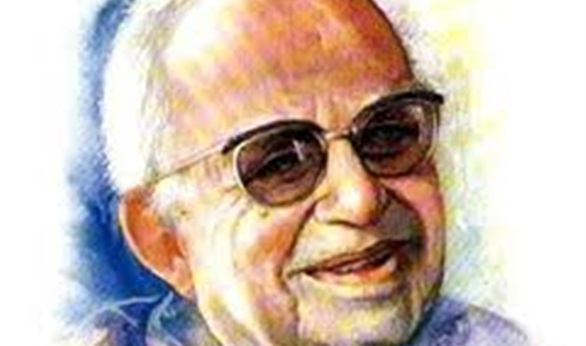
Although the traditional narrative genres of Arabic literature reach back to The Thousand and One Nights, the Tales of ‘Antara, Hayy ibn Yaqzan and the Maqamat, the short story in the modern sense is a new literary genre that developed in the last years of the nineteenth century and matured only in the first years of the twentieth. Critics hold differing views on the sources of the Arabic short story. Some draw a direct line between the modern Arabic story and medieval Arabic prose and regard the Maqamat as the ancestor of the Arabic short story. Another group argues that Arabic short-story writing has no connection whatsoever with the past and that the genre was borrowed from the West.
The dialogue with Western culture that followed Napoléon Bonaparte’s expedition to Egypt produced an elite class, a process begun by Muhammad Ali Pasha of Kavala and completed by his grandson Ismail. This select class soon expanded and took a close interest in matters that accelerated cultural change, such as education, the press, translation and urbanisation. The press in particular played a very important role in creating a new readership. Translations of narrative fiction motivated many writers and changed their view of literary fiction. More importantly, a national consciousness against Western colonialism formed in the region, and this consciousness charted new directions for the educated class.
When the First World War ended in victory for the Allies without bringing independence, national consciousness intensified and political thought grew more plural. Writers no longer saw themselves as teachers but as individuals floundering among social, intellectual and even political dilemmas. Besides allowing the Arabic short story to mature in the widespread despair of the 1920s and giving rise to a realist tendency, this also made the already existing romantic narrative even more attractive.
The principal Egyptian short-story writers of this period were Mahmud Taymur (1894–1973), Mahmud Tahir Lashin (1894–1954) and, among the younger storytellers, Yahya Haqqi (1905–1992).
In the early 1920s a number of young, modern-minded writers, led above all by Mahmud Tahir Lashin, founded al-Madrasa al-Haditha, the “New School”, in the field of the short story. This school, whose final phase Yahya Haqqi caught, attached great importance to the works of Russian writers whom its members knew through translation – Dostoevsky, Tolstoy, Pushkin, Gogol, Chekhov, Turgenev and even Gorky – as well as to nineteenth-century English and French novelists and short-story writers, and set out to establish a solidly grounded short-story tradition in Egypt and to create a modern, realist literature. It also showed that literature is not confined to political and ideological writing, and through its literary work it underlined the reciprocal relationship between the various instruments of artistic narration. In this respect the contribution of the New School to the creation of a new kind of literature – one not limited to local motifs and able to display the universal aspects of life – cannot be denied.
Nevertheless, in Egyptian literature it was individuals rather than schools that played the key role. There is no question, as in Western literatures, of a passage from one school to another. In general terms, however, one can speak of two schools in modern Egyptian literary history, each with its own method. The first is a current in criticism, different from the preceding period, which emerged with al-Diwan, the joint work of ‘Abbas Mahmud al-‘Aqqad and ‘Abd al-Qadir al-Mazini. The second emerged in the field of the short story and broke new ground by treating the man in the street and the peasant as human beings. Just as this heralded a new change in literature in general and in the short story in particular, it was also the first spark of the effort to create a realist short story. Yet realism in the Arabic short story was not born as a school either. Realism has no theoretical manifesto as it does in the West. The range of realism in the Arabic short story is wide: it covers all the basic forms of the story, from the social and the regional to the humorous, the lyrical and the psychological. Realism in Arabic literature also rests on the steady growth of the readership, on interest in the everyday and the contemporary in literature, on the spread of an urban way of life, and on the efforts of new groups educated outside the traditional system to express their own views.
Yahya Haqqi played a key role in realism’s contribution to the development of the Arabic short story. Although he left a smaller body of stories than his predecessors, these stories have distinct artistic qualities. Although he was the youngest of the writers of his time, he seems to have grasped the importance of artistic criteria more fully. This can be seen both in his critical writings and in his experimental practice in matters of form and style.
Although Yahya Haqqi, like the other storytellers of the New School, drew on many English, French and Russian writers, it is hard to say that he was influenced by any one writer in particular. Even if he was influenced by the vivid descriptive technique of Stefan Zweig and Thomas Mann and by the ability of Dostoevsky and Chekhov to analyse inner feelings, Haqqi’s sources of inspiration are simplicity, depth, a lively imagination and Egyptian oral folk literature.
The foremost achievement of Yahya Haqqi’s stories is that they mark a turning point of change within artistic sensibility. This is what makes him unique among his contemporaries. His effort to write stories that are specifically Egyptian yet carry universal messages, his close interest in the animal world, his trying out of more than one narrative technique, his frequent interweaving of realism and symbolism, and his treatment of all this within a framework of artistic sensibility are only a few of the author’s contributions to the Egyptian short story.
Yahya Haqqi’s stories generally concentrate on character and unfold through developments suited to the character. The conflict in his stories has two main lines: inner struggle, and the struggle between the hero and the outside world. The work that best reflects such a conflict is his “long story” Qindil Umm Hashim (“The Lamp of Umm Hashim”), which has recently been translated into Turkish as well. In this work the author treats, in a kind of “realist-poetic” language, the inner conflict that his hero Ismail experiences during his studies in Europe together with the dilemma between himself and the outside world, and then the inner conflict, recurring in a different form after his return to Egypt, and his struggle with the outside world. What stands out here is that he applies to the story the artistic method used in painting by the French painter Degas. In his paintings Degas draws the nuances of the same image one after another and from these detailed images builds a unified image whose parts complement one another. Although each image differs from the previous one, each is a continuation of the one before. The overall picture emerges only when the sections are set side by side.
Another striking feature of Haqqi is that he is a stylist. Two main sources seem to have helped the author form a rich and polished style. The first is the pieces he wrote in the manner of Turgenev; the second is the “tableaux” he wrote under the technical influence of the Impressionists, especially Degas and Monet. From the experience he gained from these two sources, the author attached great importance to a technique he called al-uslub al-‘ilmi (“the scientific style”). In a lecture he gave in Damascus in 1959 he defined this technique as a method that is clear, analytical and focused on depth. The method he set out consists of two steps. The first step on this path is to get rid of “verbal rhetoric”, which means avoiding the “causal” particles so often used in Arabic, the conjunctions used to link sentences to one another, and the stringing together of synonyms. The second step is to do away with “mental rhetoric”, by which he means getting rid of superficiality and obscurity of meaning. It seems that his identity as a diplomat contributed a great deal to the author’s stylistic side (between 1930 and 1954 he served as a diplomat in Egypt’s missions in Jeddah, Istanbul, Ankara, Rome, Paris and Libya).
As a storyteller, critic and stylist, Yahya Haqqi still holds a key role in modern Arabic literature. In artistic sensitivity and in the standard of his stories he is a writer from whom Turkish storytellers could learn, yet, like many writers of the Eastern world, he has had the misfortune of remaining unknown in Turkey.
First published in: Son Duvar, March 1998, pp. 30–31.
Read the essay as published in the magazine (PDF, in Turkish) →
Translated from the Turkish for this site.