Suat Baran
“The bilingual Arabic–Turkish selection of poems by al-Mutanabbi – known as the Dante or the Shakespeare of the Arabs, though he lived in the tenth century, far earlier than either – translated by Mehmet Hakkı Suçin, is an important gain for completing the body of Arabic literature in Turkish.”

In an earlier article I tried to explain at length that the prejudices and stereotypes to which Arabic literature has been subjected lie behind its failure to attract sufficient interest in Turkey.[1] In short, I argued that the main factor is that Arabness and Islam are too closely identified in people’s minds. Yet Arabic literature lies far beyond these stereotypes; it is a literature produced across a far more varied and colourful spectrum. This was true of pre-Islamic and post-Islamic literature alike. When we speak of Arabic literature, we are speaking of a literature rich in religious, cultural and linguistic terms – one that flourished across a vast geography stretching from North Africa to the heart of the black continent, from the Near East to the Arabian deserts – in which Arab identity is interwoven with Christian denominations such as Orthodoxy and Catholicism, with atheism, feminism, communism or different Islamic group identities, or emerges, belonging to none of these, from various ways of life shaped by purely individual concerns. In recent years, Mehmet Hakkı Suçin’s translations into Turkish from different centuries and regions of Arabic literature in particular have offered rich material for reaching at least some phases of this spectrum. The bilingual Arabic–Turkish selection of poems by al-Mutanabbi – known as the Dante or the Shakespeare of the Arabs, though he lived in the tenth century, far earlier than either – published a few months ago by Everest Yayınları, again translated by Mehmet Hakkı Suçin, is an important gain for completing the body of Arabic literature in Turkish.

Although he lived and wrote as early as the tenth century, al-Mutanabbi is a fascinating figure, not only for the important contributions his poems made to Arabic literature – contributions whose effects continue even today – but also for a life that could almost be called cinematic. Born in 915 in Kufa, within the borders of present-day Iraq, the poet spent part of his youth in cities such as Baghdad, Antioch, Latakia, Tripoli and Damascus. His real name was Abu al-Tayyib Ahmad; the nickname al-Mutanabbi was given to him in his twenties on the strength of a slander that he had claimed to be a prophet. Meaning “the one who claims prophethood”, al-Mutanabbi gradually replaced his real name and has lived on that way in the minds of Arabs for more than a thousand years. After spending two years in prison in Homs because of this slander, he wrote his poems in the protected environment offered by many rulers and high officials through the benefits of the patron–poet relationship – above all the Hamdanid ruler Sayf al-Dawla, one of the great patrons of poetry and letters of the age, as well as the Ikhshidids in Egypt and the Buyids in Iran. Even so, al-Mutanabbi was hardly an easy man to get along with. Frequently the target of envy-driven intrigue, slander and defamation at court, he had more enemies than friends. Fatik ibn Abi Jahl, uncle of Dabba ibn Yazid, whom al-Mutanabbi had satirised in his poems, sought to kill him and seize his wealth to avenge his nephew. Fleeing enemies who wanted him dead and looking, with his family, for a new patron to shelter with, al-Mutanabbi was attacked and killed together with his relatives by Fatik’s band in September 965. According to Mehmet Hakkı Suçin’s preface to the book, the attackers took the poet’s money and valuables and threw away the things they considered useless – among them the notebooks in which he wrote his poems.[2] Having spent his life migrating from city to city, from palace to palace, from state to state, even from continent to continent, al-Mutanabbi is in this respect one of the earliest known stateless poets, like a wandering Bedouin. Yet despite this wandering and his partly placeless identity, his ties to Arabness and to Arabic were not to be shaken. Even where he encountered the Persians and their literature, as in his poem “The Valley of Bawwan”, Arabic and Arabic poetry continue to assert themselves in all their dominance and grandeur.[3]
Quite apart from his popularity in his own time, al-Mutanabbi influenced many poets in later centuries and shaped their very poetics. Among them are non-Arab poets such as the Andalusian Jewish poet Judah ha-Levi (Toledo, d. 1141), along with many others writing in different centuries, such as Abu al-Ala al-Maarri, Ahmed Shawqi, Mahmoud Darwish, the Egyptian poet Amal Dunqul, the Iraqi poet Abd al-Wahhab al-Bayati, al-Jawahiri, Khalil Hawi, Omar Abu Risha and al-Akhtal al-Saghir.[4] In short, al-Mutanabbi is a true touchstone of Arabic poetry.
That al-Mutanabbi is little known in Turkish outside certain circles in fact recalls a belatedness similar to the late opening of Arabic poetry to the world. The adventure of Arabic poetry’s opening to the world really did take place very late. Arabic literature, and especially its poetry, like all other national literatures, would take its share in the nineteenth and twentieth centuries, when modernity began to sweep the world. Until then, the argument that Arabic poetry was untranslatable formed the greatest obstacle to its translation into other languages, almost until the early twentieth century. In his introduction to the book, Ali bin Tamim quotes al-Jahiz, the Abbasid-era scholar and man of letters:
The excellence of poetry is confined to the Arabs and to those who speak the Arabic tongue. Poetry cannot be translated, nor may it be transferred into another language; when it is translated its metre is broken, its rhythm destroyed, its beauty lost, and everything that makes it wondrous falls away – unlike prose.[5]

This argument recalls the debate on the untranslatability of poetry that can arise with poetry translation in any language. At the same time, even if Ali bin Tamim does not mention it directly, this approach seems to me also connected with the excessive expectations placed on the fine nuances of the Arabic language, much emphasised in debates on the untranslatability of the Qur’an. Mehmet Hakkı Suçin, who in his preface to the book addresses this arduous nature of poetic language and the harmonious language of al-Mutanabbi, has drawn on the commentaries on al-Mutanabbi’s diwan by great Arab poets such as al-Maarri and Adonis, and on various other sources, to produce an al-Mutanabbi in Turkish that is linguistically more accurate, has not lost its musicality, and is denser and more original. When reading al-Mutanabbi’s poems in Turkish, the simplicity and fluency of the language, together with the vividness of the emotions it evokes, show themselves so readily that it is impossible not to appreciate the translator’s achievement.
Although al-Mutanabbi built his poems on themes drawn by the poets of the Seven Suspended Odes – the desert, Bedouin life, heroism and love – he placed weight on many themes such as friendship, death, betrayal, existence, loss and honour, and so produced couplets that, far ahead of his time, can be read as if written today. In these poems, written long before the age of Romanticism, the romantic notes set down on paper and addressed to the opposite sex carry readers into the world of their own hearts, while the war cries rising on the battlefield likewise float them in an intensity of quite different emotions. Embodying his own poetry in a substantial part of his diwan, the poet always tries to work visuality, body and presence together with sound and hearing. For example, the lines from the poem “Weakness”,
Öyle nahif ki bedenim
Konuşmasam göremezsin onu[6]
bring to mind the performative side of poetry. As is well known, until late modernity – when readers began to withdraw into a corner, to read alone and to become solitary – reading always took place as a performance, a spectacle or act carried out collectively. The performative side of these poems, written almost a thousand years ago, also brings to mind, independently of their content, the relationship of poetry itself – of what is present – with the ear and with hearing.
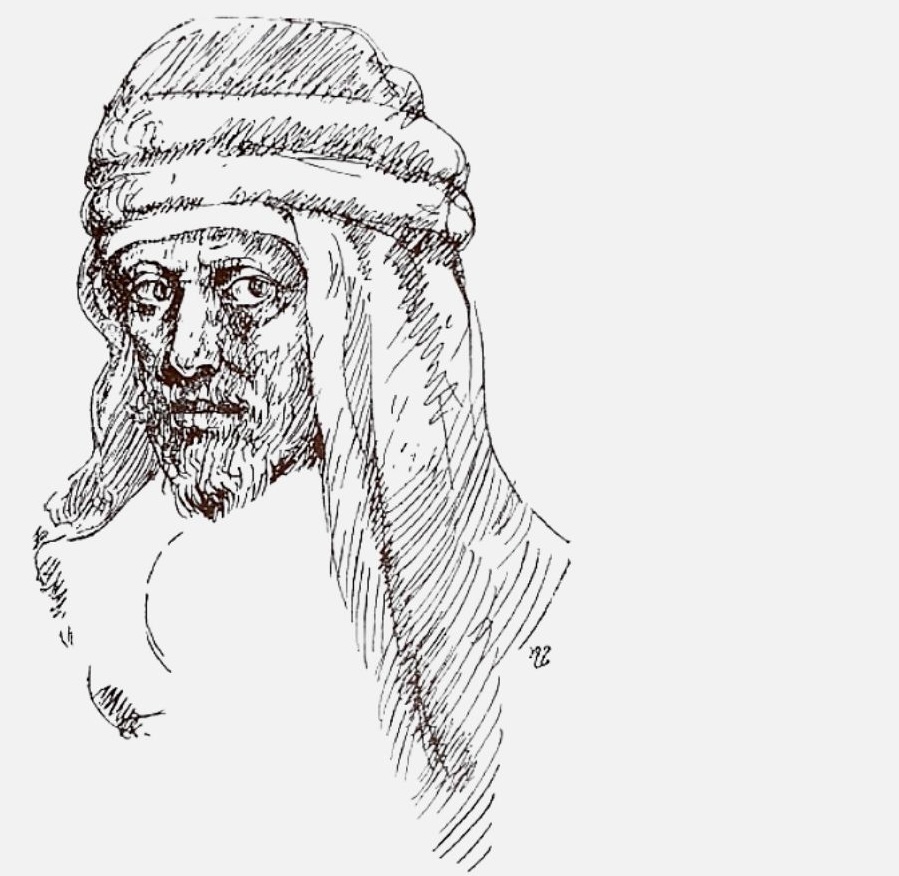
The poem “I Have No Need of Homelands” by al-Mutanabbi – stateless, a wandering Bedouin, free of place – carries very familiar notes for us in an age when migration, displacement and homelessness have become commonplace:
Eskiden saçlarım beyaz olsun isterdim
Ki saklasın şakaklarımdaki beyazlık gençliğimi
Neden şimdi kötü görüyorum arzuladığımı bir zamanlar
Ve yerine gelmişken dileğim neden arzulamaktayım sakladığımı
Her tarafı kaplayan o renkten peydahlandı siyahlar
Nasıl peydahlanırsa gün ışığından semanın sisleri
Mızrak mızrak olsa da yüzümdeki beyazlar
Ruh yaşlanmaz yaşlansa da onun bedeni
Kalmasa da tek bir tırnağım ruhumun tırnakları var
Hiç dişim kalmasa da ağzımda dökülmez onun dişleri
Zaman istediği gibi değiştirebilir bedenimi fakat
Ömrün sonunda olsam da değişmez ruhumun körpeliği.[7]
Al-Mutanabbi continues the same theme in his poem “Homeless and Rootless”:
Nasıl teselli bulur ki kimsesiz yersiz yurtsuz
Yoksa bir sırdaşı insanın, nedimi ve kadehi
Dilerim ki alsın götürsün zaman
Gitmeyi başaramadığı anlara beni
Vurdumduymaz karşıla hayatını
Henüz terk etmemişken ruhun bedenini
Uzun sürmeyecek bil bu sevinçli hallerin
Ve hüzün geri getirmeyecek sana geçip gidenleri
Dünyaya sevdalananların en büyük hatası
Aşka düşmeleri anlamadan dünya hallerini[8]
So how different, really, is the world drawn in his poem “Alone” from the world we live in and breathe today? Despite the thousand years between us, the similarity of human beings’ troubles with themselves and their surroundings is in this respect both shocking and not. The main reason it is not shocking is that, despite cultural, technological and geographical differences, human beings are surrounded by the same bodily and the same spiritual realities.
Tenine dokunmaktan alıkoyuyor kendi elini yakaza halinde
Ve tutkularını gemliyor uykuda sevgiliyi görünce
Öyleyse neden tutuluyorsun şuh dilberlere içten içe
Bir ar işlemekten korktuğun halde her halvetinde
Öyle dayattı ki kendini alıştım bu illete
Bıktı usandı benden tabibim de ziyaretçilerim de
Sevgilinin evinin yanından geçerken okradı atım
Hüzünlenir mi atlar da evleri görünce
Bir ümidin peşindeyim ama arasız
Geceler de beni engellemek için peşimde
Ümit büyüdükçe azalır imdada koşanlar
Yalnızım ve yoldaşım yok gittiğim yerlerde
Bir tek görmüş geçirmiş küheylanım mutlu ediyor beni
Zorluk üstüne zorluk yaşadığım bu demde
O ki çarpışmanın seyrine göre esneyip bükülüyor
Mızraklar altında bükülmüş eklemleri sanki gemlerde[9]
Is it possible for the line in the poem, “Hüzünlenir mi atlar da evleri görünce” (Do horses, too, grieve when they see the houses?), not to bring before the eyes of today’s reader Nietzsche, throwing his arms around the neck of a horse being whipped and weeping in deep sorrow? This wealth of association that the poem awakens in the reader stems less from the historicity of his poetry than from the power of its ahistoricity, its timelessness. Horses really do grieve, and so do the people who look at them. Indeed, grief is beyond the human: it belongs to what is human as much as to what is not. It binds us to the universe and to one another. In the same way, it makes us blind to one another. It forces us to look at one another.

Although the timelessness of the human story he draws in his poems predominates behind the introduction of al-Mutanabbi to today’s world through comparisons with Dante and Shakespeare, when we look a little more closely at his poems – helped by the translator’s footnotes – the historicity of the world in the couplets makes itself felt through references to striking anecdotes. Born, as is known, in the city of Mayyafariqin, today the Silvan district of Diyarbakır, Sayf al-Dawla, the Hamdanid ruler and one of al-Mutanabbi’s most famous patrons, fought many battles and clashes with the Byzantines in the lands of Rum; the poet refers to them abundantly, and as he rouses the soldiers and exalts the ruler in his lines, he also tells of a different historical reality little known to today’s readers. To us, as today’s readers, he recalls the Muslim presence in Anatolia almost a hundred years before the Turks entered it, the wars waged against Byzantium, and the land of Rum – a true object of desire – both disparaged and exalted. This world is told through the eyes of an Arab poet positioned on the other side of the war.
Coming across, among the couplets, the world of the clashes al-Mutanabbi describes in Marash – then a city with a Christian majority – it would be unfair not to mention the famous Byzantine/Greek epic Digenis Akritas,[10] little known to readers in Turkey: it emerged around the twelfth century but probably dates back orally to an earlier time, and its hero – reminiscent of Battal Gazi in Turkish folk tales – is the child of an Arab father and a Byzantine mother (both, geographically, from around Malatya). Both Marash and Malatya were among the main stages of the Arab–Byzantine rivalry in this period. So when we look at the history of this period through the frame al-Mutanabbi draws, however limited, we also see that Anatolia, where the Turks settled, had long since begun to be chosen as a homeland by various Muslim groups. In this way, a different Marash, a different imagining of Anatolia, takes shape.
When we read this bilingual selection of poems by al-Mutanabbi, recently translated into Turkish – a poet in whose verse the historical content is more limited than the timeless – we do not merely encounter one of the magnificent pillars of classical Arabic literature; we also learn that this great Arab poet wrote some of his poems in southern Anatolia or with Anatolia in mind. On this journey, which spreads from Anatolia to the Middle East and from there to North Africa, and which we take both within time – in the historicity of the period in which it was written – and outside time, we gain the chance to rethink, through a poetic aesthetic, the meanings of being human and of existence, and our shared concerns. In our present, where new wars and new quests always promise new houses and homes, I would like to close with al-Mutanabbi’s poem “Houses”, which confronts us once again with the possible meanings of home, along with many vital concepts:
Nice kalplerde yerleriniz var ey evler
Issız kaldınız fakat sizlerle şenlikli kalpler
Ölümü getiriyorum gözlerimin önüne fakat
Kimi suçlayayım ki maktul ve katil aynı
Bütün ceylanlar terk etmişler evleri
Sürüden geriye kalan başıboş bir sanrı
Bize oklar fırlatanlar da bizden kaçanlar da onlar
Pusuya yatanlar ama bundan habersiz olanlar da kendileri
Toprağa saplanmayan cinsten tuzaklarla
Antilopların öcünü aldı bizden hemcinsleri
Güzeller için arzulanan olmak hoştur fakat
Kalıcı değildir gençliğin taze gölgesi
Geçip giden bir andır zevk de
Bir sevgilinin veda öpücüğü gibi
Zaman kafasının dikine gider daima
Ne bir lezzet kalır katışıksız ne de bir neşe adamakıllı
Cahiliye ehlinden hiç kimse ulaşamadı şiirime
Babil de duyamadı kelimelerimdeki sihri
Eksik biri gelip de sana beni kötülerse
Kanıtlamaktan başka bir şey yapamaz eksiksizliğimi[11]
Notes
[1] Suat Baran, “Arap edebiyatı dendiğinde ne anlarız, ya da Yedi Askı Şiirleri’nin düşündürdükleri” (What do we mean by Arabic literature, or thoughts prompted by the Seven Suspended Odes), K24, October 2020.
[2] Mehmet Hakkı Suçin, “el-Mütenebbi: Hayatı, Poetikası ve Türkçe Çeviri” (Al-Mutanabbi: His Life, Poetics and Turkish Translation), pp. 19–38, in al-Mutanabbi, İnsanın Şarkısı (Seçilmiş Şiirler), trans. Mehmet Hakkı Suçin, Everest Yayınları, Istanbul, 2024, p. 30.
[3] Al-Mutanabbi, İnsanın Şarkısı (Seçilmiş Şiirler), trans. Mehmet Hakkı Suçin, Everest Yayınları, Istanbul, 2024, p. 181.
[4] Mehmet Hakkı Suçin, “el-Mütenebbi: Hayatı, Poetikası ve Türkçe Çeviri”, pp. 33–34.
[5] Ali bin Tamim, “Şiir Çevirisi: Kaçınılmaz Bir Medeniyet Yolu” (Poetry Translation: An Inevitable Path of Civilisation), pp. 13–18, in al-Mutanabbi, İnsanın Şarkısı (Seçilmiş Şiirler), trans. Mehmet Hakkı Suçin, Everest Yayınları, Istanbul, 2024, p. 14.
[6] Ibid., p. 43.
[7] Ibid., p. 83.
[8] Ibid., p. 177.
[9] Ibid., p. 87.
[10] Translated freely, the name Digenis Akritas means “the two-blooded borderer”: one who lives on the frontier and descends from two different lineages.
[11] Al-Mutanabbi, p. 241.
First published in K24, 7 November 2024. Translated from the Turkish for this site.