Ömer Erdem
The Shakespeare of the East, the canonical name of pre-modern Arabic poetry: al-Mutanabbi… Mehmet Hakkı Suçin, who says “his poetry is the song humanity has sung through the ages”, introduces us to this unique poet with İnsanın Şarkısı (The Song of Man), which he has brought into Turkish.
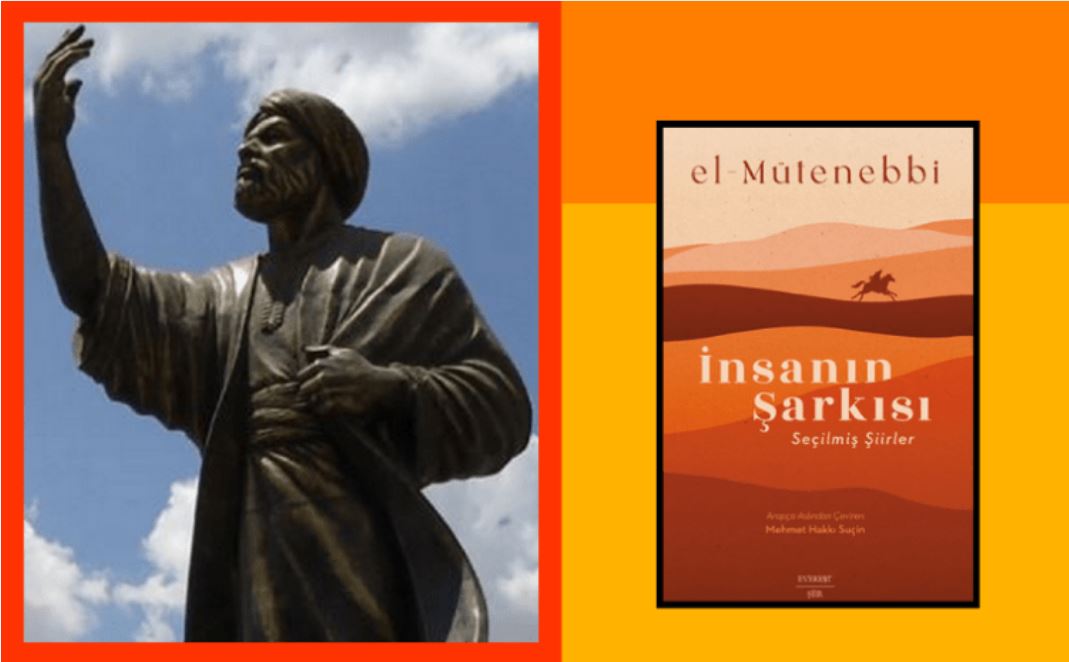
“Al-Mutanabbi’s poetry is the song humanity has sung through the ages. Ages, people and poems change, but the ‘song’ always remains the same. What Dante is to the Italians, Shakespeare to the English, Goethe to the Germans and Hugo to the French, Abu al-Tayyib al-Mutanabbi is to the Arabs,” comments Mehmet Hakkı Suçin, translator of al-Mutanabbi’s The Song of Man…
As an ancient language, Arabic, like other languages, naturally makes its creative leaps through poetry. Moreover, the fact that it contains two sharp yet absolute processes – before and after the Jahiliyya – is highly significant for the value of a language’s experience. When we read a poet, we are in fact also looking at the experience of that language. Although we are so close to it, we cannot be said to be aware of the encompassing reach of Arabic poetry’s past. Through free and contemporary translators like Mehmet Hakkı Suçin, we gain the chance to read examples of early Arabic poetry released from the knot of every kind of tie.
Suçin opened this path with his translations of the Seven Suspended Odes. Although Ali bin Tamim, head of the Abu Dhabi Arabic Language Centre, interprets translation in his preface to The Song of Man as a kind of “creative betrayal”, Suçin stands a step ahead in what Bin Tamim himself underlines – “the nature of the translated text and the translator’s ability to carry the text from the source language into the target language (from Arabic into Turkish)”. What is more, he brings into our age a unique poet who “filled the world and kept people busy”.
In a long and highly detailed introduction, Suçin presents to the reader al-Mutanabbi’s life, his poetics and the translation process. Besides the cultural basins in which post-Islamic Arabic poetry flourished, he provides information on poetic movements and poets. We learn that the poet led a life resembling the lively and turbulent period after the Abbasid age, just like the region he lived in, and that he came from a poor family but overcame this with his intelligence.
Born around 915 and killed at the age of fifty during a robbery, al-Mutanabbi wrote poems on different themes at different periods of his life, swinging across a richly coloured spectrum – from nationalist sentiments and the “widening of the boundaries of the canonical focus of pre-modern Arabic poetry” to the claim of prophethood in poetry.

Guided by a total of 124 poems selected from the poet’s Diwan, we witness these oscillations. Here too we encounter the basic elements of early poetry: love, woman, war, death, wine, homeland, nothingness, courage. While boldly putting forward his own self, the poet also indirectly winks at the causes that created that poetry – language, society, era.
This must have been one of the poet’s intentions. Especially when poetry meets woman, we encounter one of the subjects early poetry took up with zeal, like war games. The poet constantly changes position before the woman; he does not want her face to appear fully. The poem containing the couplet “Sen ihtişamın şairisin bense kelimelerin / Mülkiyetimizdedir sözün en ince anlamları” (You are the poet of splendour and I of words / The subtlest meanings of speech are ours) is titled “To a Woman”. Naturally, this sensibility will take wing together with love. In this poem love is carried so far that it is taken beyond union and made into separation itself.
“Bir yıllık ayrılıktan sonra gördüğümde onu / Vedanın ta kendisiydi selamı” (When I saw her after a year’s separation / Her greeting was farewell itself), says the poet. Farewell is all but predestined. Out of reverence for love, the poet hides the love he feels for his beloved. And yet passion bursts in swiftly, with the nobility of an Arabian horse. What you call passion is sleeplessness and a pounding heart. Nor does philosophical anxiety ever stay away.
When he asks, “Geceleri işi gücü devemin aklına şüphe düşürmek / Benim göğsüm mü geniş çöl mü daha geniş yoksa diye” (By night her only task is to set my camel wondering / Whether my breast is wider or the desert), the night is personified and clothed in the attributes of a being. Recklessness and defiance in the face of fate bring another front: cries rise such as “Öyleyse fırlat beni nereye istersen / Bedenim insan bedeni fakat göğsümdeki aslan yüreği” (So hurl me wherever you will / My body is a human body, but the heart in my breast is a lion’s).
Death, meanwhile, is always a sand dune heaped up by the winds that are never absent from the desert. Death is a thief: “Ölüm ki nasıl geldiği görülmeyen bir hırsız / Dolaşırken elleri yoktur, koşarken ayakları” (Death, a thief whose coming is never seen / He has no hands as he roams, no feet as he runs). As for friendship and loyalty, they remain mere words in life: “Öyle bir zamandayız ki insanlar küçük / Cüsseler ne kadar büyük olsa da” (We live in a time when people are small / However large their bodies may be).
The translator gives us what does not change in poetry and in people, even when the language in which it was written changes. Sometimes it is fate, sometimes the subject’s endless struggle to bring itself into being. Al-Mutanabbi’s poems show us exactly these things. They bring the secrets of how a poetry that never bows its head finds the oases of life.
Köpek Dişleri
Zamanın köpek dişleri iyi tanıyor beni
Epey zamandır yokluyorlar etimi
Direnen bir güç var bende aksiliklere karşı
Ve evcilleştiren en püsküllü belaları
(el-Mütenebbi)
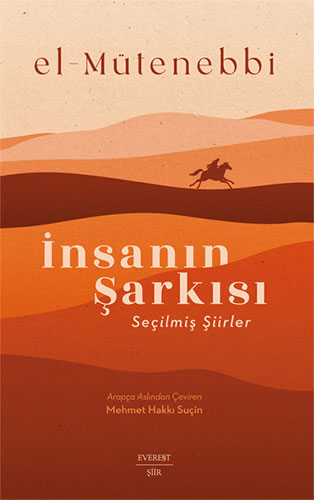
İnsanın Şarkısı (The Song of Man)
Al-Mutanabbi
Translated by Mehmet Hakkı Suçin
Everest Yayınları, 2024
Poetry, 352 pages.
Source: 10haber.net, 29 March 2024. Translated from the Turkish for this site.